
Why Was Binah Built? A Simple Budgeting App for Real Life

For most of us, money is complicated. Not just in the numbers, but in how we feel about it. It carries weight, stress, guilt, ambition, and sometimes even shame, and yet so many of us grew up never actually talking about it.
Think back to your own childhood. How often did your parents sit down and explain budgeting, saving, or the basics of managing money? For a lot of people, the honest answer is rarely, if ever. Money simply wasn't part of the everyday conversation at home. So we grow up and step into adulthood having to figure it all out ourselves, often through trial, error, and a fair few financial mistakes along the way.
As life moves on, most of us reach a point where managing money starts to matter more. Bills increase, responsibilities pile up, and suddenly having a proper handle on your finances feels less optional and more essential. That's usually when people start searching for a budgeting app that can genuinely help. And that search is often where the frustration begins.
The Problem With Most Budgeting Apps
Countless apps promise to make budgeting easier, yet so many fall short. Some are downloaded for free and abandoned within days. Others come with a price tag, adding insult to injury when they still don't deliver. Time and again, people find themselves buried under complicated features, confusing dashboards, and a process for logging a simple expense that feels far more cumbersome than it should. What ought to be one of the easiest tasks, tracking where your money goes, ends up feeling like a chore.
The truth is, most budgeting apps try to do too much. They pile on features nobody asked for, while missing the one thing that actually matters most: making it effortless to understand your own finances.
This is exactly the gap Binah was built to fill.
How Binah Makes Budgeting Simple
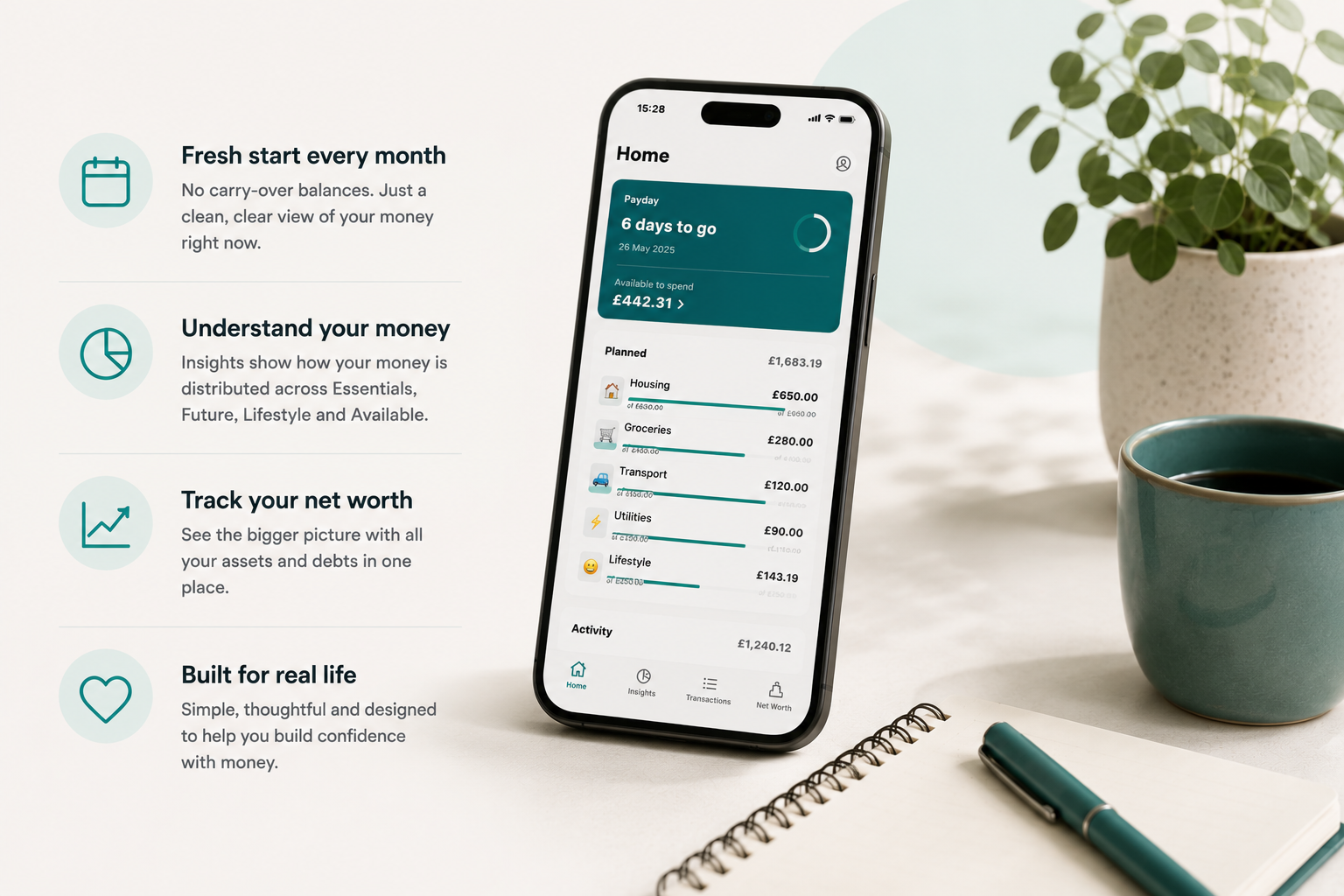
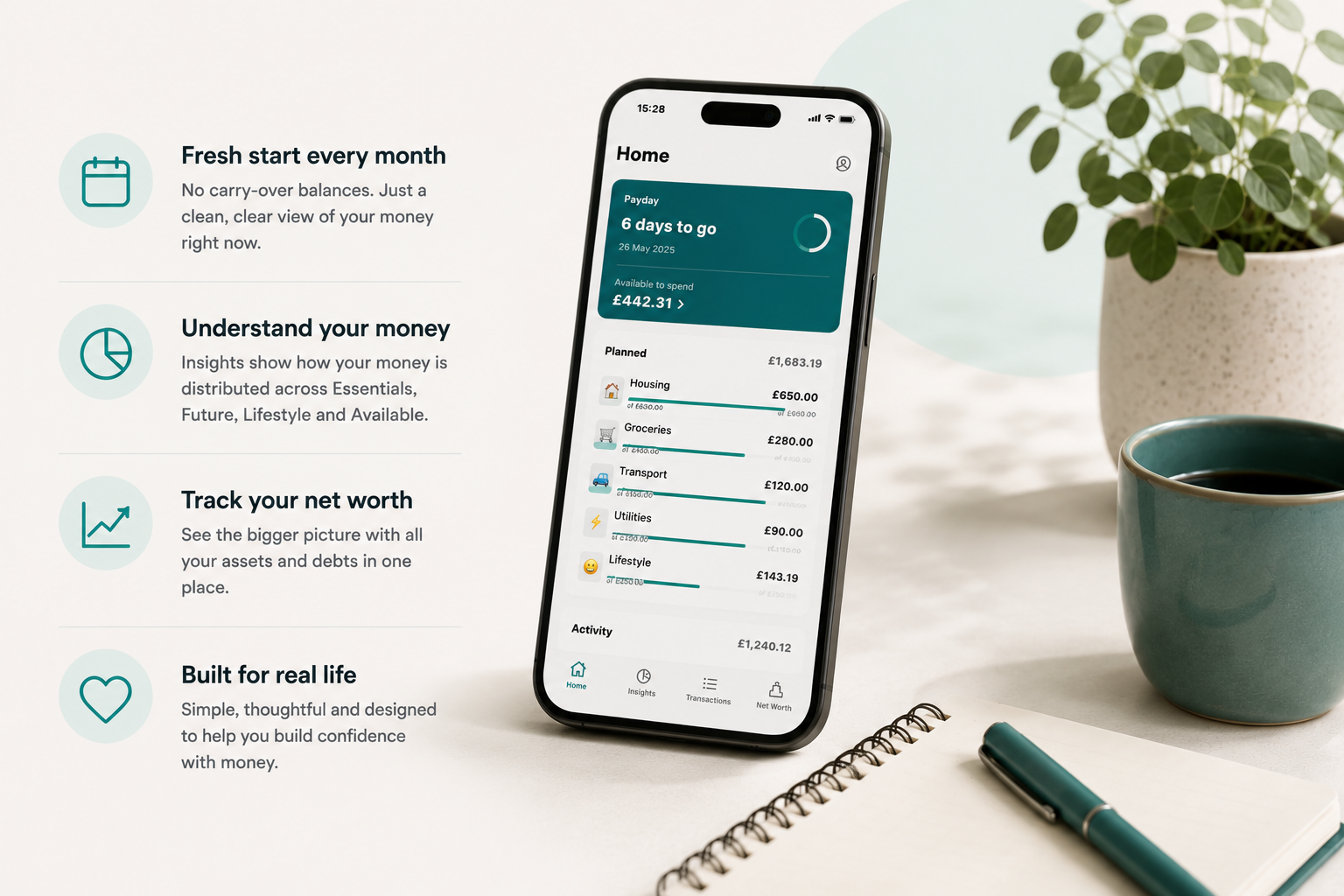
Binah works on a calendar-month basis. Every month resets clean, with no carried-over balances muddying the picture, so it's always clear exactly where you stand right now, not where you stood three months ago.
Expenses are organised into clear, bounded category cards, things like Housing, Groceries, and Transport, each matched with its own emoji icon so you can scan your spending at a glance rather than wading through spreadsheets or dense lists. Recurring expenses, whether monthly or yearly, are handled automatically, with correct date logic across every month length, so nothing gets missed just because February is shorter than July.
Transactions are split into Planned and Activity views, so you can see what's coming up alongside what's already happened. That distinction alone removes a huge amount of the guesswork that makes budgeting feel stressful.
Understanding Where Your Money Really Goes
Knowing you've spent money is one thing. Understanding what that spending actually says about your life is another.
Binah's Insights screen breaks spending down into Essentials, Future, Lifestyle, and Available, with a percentage-of-income view that shows how your money is really being distributed. Rather than just a list of numbers, it gives a genuine sense of balance, whether too much is going on lifestyle spending, or whether there's room to put more towards your future.
Tracking Net Worth, Not Just Spending
Budgeting is only half the picture. Binah also tracks assets and debts together, with running totals and a trend view that shows the bigger financial journey over time. Accounts can be added, edited, or removed and categorised by type, whether that's a savings account, an investment, or a everyday current account, giving a fuller, more honest view of where things actually stand financially.
Designed With Real Life in Mind
A lot of thought has gone into how Binah feels to use, not just what it does. The onboarding experience is built around an emotional sequence, moving from Tension to Relief to Welcome, before gently guiding new users through setting up their workspace, payday, income, and expenses. It's designed to feel less like filling in a form and more like finally being understood.
Small touches carry through the rest of the app too. Dark mode is supported throughout, loading states are smooth rather than jarring, and new expenses or accounts animate into place instead of simply appearing. None of these things change what the app does, but they change how it feels to use, and that matters far more than most budgeting apps give it credit for.
Built for Everyone, Including Neurodivergent Users
For many people, particularly those who are neurodivergent, this kind of simplicity isn't just nice to have, it can be genuinely life changing. A clear, uncomplicated tool can bring structure and confidence to something that so often feels overwhelming, turning money management from a source of stress into a daily habit that actually sticks.
If you've ever felt that same frustration, searching for a simple budgeting app that just works without the clutter, Binah was built with exactly that in mind.
Give Binah a try for free today.